West Coast
The LuminariesThe West Coast is a landscape of rivers, forests, and shifting shores, but in the novel it is also a record of competing claims. Gold brings prospectors and profit-seeking buyers into the region; the same land carries the history of Poutini Ngāi Tahu dispossession and a different understanding of belonging, grounded in use, knowledge, and care.
Territory, purchase, and dispossession
Six years before the events described, the Crown purchased the extensive western territory of Poutini Ngāi Tahu for three hundred pounds. The people were left with the Arahura River, parts of its banks, and a small parcel at Mawhera, at the mouth of the Grey River. What had initially seemed unfair had, by the time of the novel, come to be understood as outright theft. Meanwhile, thousands of diggers arrived, each paying a pound for a prospector’s licence and ten shillings per acre for land. Those fees produced considerable income, before the still-unmeasured value of gold in the rivers and sands was even counted.
The contrast between those figures and the scale of the land and its resources makes the settlement’s legal arrangements look starkly unequal. Crosbie Wells, for example, paid fifty pounds to the Crown for one hundred acres at the eastern end of the Arahura Valley. The purchase was legally recognized, but the narrative places it within a prior transfer that had already stripped Poutini Ngāi Tahu of most of its territory. Legal ownership and a just claim to the land are therefore not treated as equivalent.
A coast known through movement
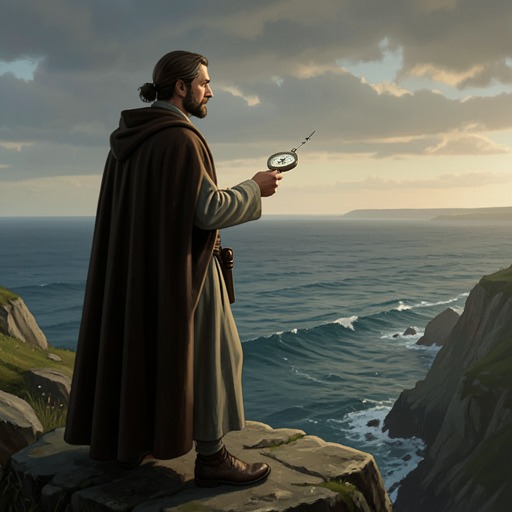
Te Rau Tauwhare has travelled the West Coast on foot, by cart, on horseback, and by canoe. His knowledge is neither an abstract map nor a view limited to a single settlement: he can picture the region from Mohikinui and Karamea in the north, through the Taramakau, Punakaiki, and the misty flats north of Hokitika, to the southern beaches at Okahu and Mahitahi. Beyond that difficult coastline lie the fjords. Though he has never seen Piopiotahi, he loves it because it is part of the land of Te Tai Poutini.
This geographic knowledge is bound to Tauwhare’s sense of home and responsibility. The Arahura River is central to his mental map of the coast, and its valley connects everyday movement through the landscape with the history of land loss. The region is not presented as empty country awaiting settlement: it is already known, travelled, and valued by the people whose remaining territory has been sharply reduced.
The Arahura Valley and competing values
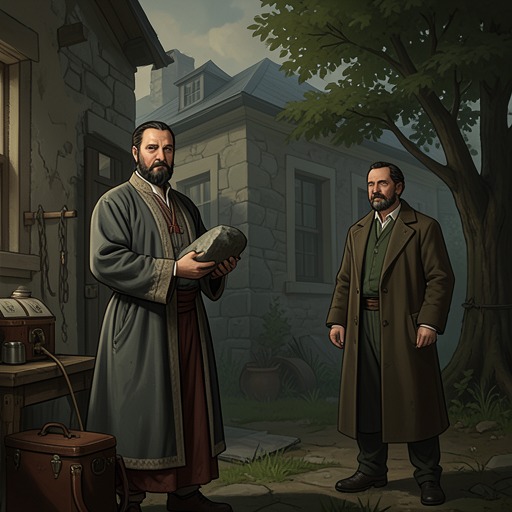
The Arahura River is rich in greenstone. Tauwhare is especially skilled at finding it in the riverbed, recognizing stones that look ordinary on the outside but reveal a bright green interior when split. Rather than break them at the riverbank, he carries them back to Mawhera to be blessed and opened ceremonially. The work depends on careful attention to the place and its materials, not simply on extracting something saleable.
Wells’s acreage borders land to which Poutini Ngāi Tahu have recently been confined. He builds a one-room cottage overlooking the river, clears a garden, and begins constructing a timber mill. The sound of his axe first draws Tauwhare to him; their cordial acquaintance grows into frequent visits. Wells is eager to learn about Maori life and lore, and the cottage becomes a regular meeting place for the two men. Their friendship develops within an unresolved conflict over who may claim the valley and what it means to possess it.
That conflict sharpens when Edgar Clinch legally buys Wells’s property. Tauwhare cannot respect an acquisition made for profit rather than use: as far as he knows, Clinch had scarcely visited the valley before the purchase and had not walked the boundaries afterward. Clinch does not settle, cultivate the soil, fell timber, dam the river, or mine for gold; he has the cottage stripped of whatever can be sold, and even this is done by proxy. For Tauwhare, the saleable value of a place cannot replace the work and attachment of living there. The novel gives that distinction its force through the particular valley and cottage rather than treating land ownership as a detached legal question.
Rivers, gold, and the damaged shore
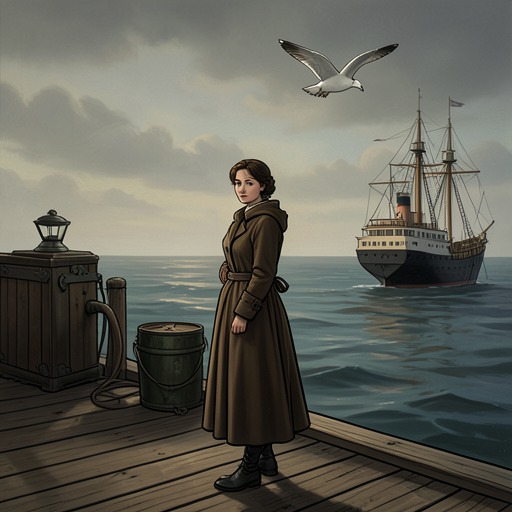
The West Coast’s mineral wealth also alters its waterways. Alistair Lauderback associates his misfortunes with his arrival in Hokitika, where he encountered Wells’s body, and regards the wreck of the Godspeed as proof that the district is cursed against him. The narrative supplies a material cause beneath that superstition: gravel and silt from upstream gold claims move into the Hokitika River mouth, where shifting tides rearrange them into an unstable bar. The Godspeed is wrecked on the accumulated tailings of countless claims.
The coast thus links human ambition to consequences that exceed any one prospector’s intentions. Gold is taken from rivers and sands, while the sediment left by mining helps change the harbour that ships must cross. The same landscape that makes the rush possible becomes part of its cost. Across the West Coast, the struggle over land is inseparable from the struggle over how it is valued: as a source of revenue and title, or as a lived place whose histories and changing waters cannot be reduced to a price.